

6 Husky Training Tips
Training a Siberian Husky takes patience, consistency and balanced reinforcement, because the breed is independent, athletic and strong-willed.
A husky will always ask, “What is in it for me?” Training works when you have a good answer, and when the rules stay the same every single day.
Get that right, and a husky is one of the most rewarding dogs you can own.
1. Start Early and Build a Routine
Start training the day your puppy comes home, at around 8 to 10 weeks. Early habits are far easier to build than to undo.
A fixed routine helps your puppy understand what to expect. Keep a simple schedule:
- Meals at the same times each day
- Potty breaks after waking, eating and play
- Short training sessions and play
- Plenty of rest in a quiet part of the house
Begin crate training in the first week. Let your puppy get accustomed to the crate slowly, with chew toys inside, so it becomes a calm space and never a punishment.
Socialise early as well. Introduce new people, other dogs, other animals and new environments a little at a time. The goal is a puppy that grows up confident rather than overwhelmed.
2. Find Rewards Worth Working For
Dry kibble rarely cuts it with a husky. Use high-value treats such as small pieces of cooked chicken, deli turkey or cheese. Save the best food for the hardest work.
Huskies also work for play, a ball or the chance to sniff. Rotating rewards helps motivate a dog that bores easily.
Use clear mark words. “Yes” tells your husky a reward is coming. “No” tells them to try again. A clicker marks the exact moment even more precisely.
Keep training sessions to 5 to 10 minutes. Keep them fun, repeat the basics often, and stop while your husky still wants more.
Rewards teach the behaviour. Once your husky clearly knows a command, calm accountability holds them to it. That balance is what builds lasting success.
3. Use Structure, Not Force
Harsh corrections and physical punishment make huskies shut down, rebel, or lose trust. Force simply does not work with this breed.
What does work is calm, consistent leadership. Everyone in the house uses the same commands, the same way, every time.
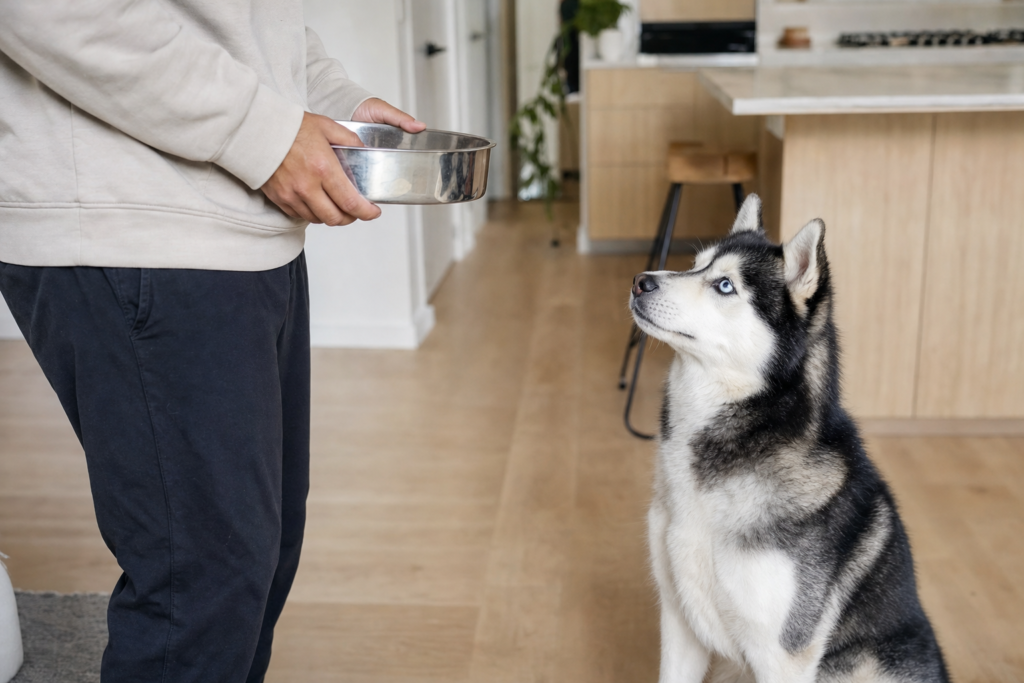
Apply a “nothing in life is free” rule.
Your husky should sit and wait:
- Before meals go down
- Before the door opens
- Before receiving affection
Withholding attention is one of the clearest corrections a husky understands. Turn away from jumping or demand barking, and give attention back the moment they settle. Never correct in frustration. If you feel it building, end the session and try again later.
Stick to it. Huskies test the rules, and every exception teaches them the rule is optional. Good obedience training is built on that kind of control, not on force.
4. Teach the Four Essential Commands
These four commands are the core of husky obedience. Teach them in this order, in a quiet room first, and only add distractions once each one is reliable at home.
The techniques are simple. The hard part is staying consistent for long enough.
Name and Focus
Hold a treat near your eyes and say your husky’s name or “focus”. Reward the instant they make eye contact.
Practise until they watch you without being asked, because every other command depends on it.
Sit and Stay
Lure a sit by moving a treat back over your husky’s nose until their rear drops. For stay, take a single step back, return, and reward calm behaviour. Build distance and duration slowly, one step at a time.
Recall
Recall training is the biggest challenge with this breed. Practise in a fenced yard first, then on a long lead in quiet parks, using your highest-value treats.
Be honest about off-leash time. Most huskies should never be trusted off-leash in open spaces, however good their recall looks at home. The prey drive will win at some point.
Loose Leash Walking
Huskies were bred to pull, so expect this one to take time. A front-clip harness or head collar helps.
Stop the second the leash goes tight. Only step forward when there is slack in the lead again. Short walks with high standards beat long walks where pulling works.
Of course, loose leash manners take weeks, not days.
5. Exercise the Body and the Brain
Physical and mental exercise make a husky far more cooperative in training. A tired husky listens. A bored one makes its own fun.
Mental stimulation ideas:
- Puzzle toys and food-dispensing toys
- Scent games around the yard
- Interactive games such as hide-and-seek
- Short trick sessions
Without enough exercise, huskies dig, and digging can create escape routes. A dedicated dig pit gives that instinct somewhere to go.
Teething puppies chew everything, so keep plenty of chew toys on hand and rotate them.
In Perth, heat is the big one for this breed. Huskies carry a thick double coat. Over summer, exercise only early in the morning or late in the evening, never in the midday heat, and keep them cool and healthy at home.
6. Manage the Prey Drive and Secure the Yard
A husky’s prey drive means cats, birds and other animals are all things to chase. That instinct does not train out, but it can be managed.
Check your yard:
- Fences at least 1.8 metres high
- Nothing near the fence to climb on
- Digging blocked along the fence line
Practise “leave it” and focus around distractions, starting at a distance and moving closer as control improves.
Never leave a gate or front door open on trust. Most lost huskies did not climb anything. They simply walked out.
Need Help With Your Husky? Contact Allbreeds Today!
Huskies reward patience. With a routine, the right rewards and fair structure, you get a focused, well-mannered companion.
If recall will not hold, pulling has you stuck, or your husky keeps finding a way out, a trainer can help. We hope these tips give you a strong start.
Our husky training and K9 Bootcamp programs build reliable obedience.
Get in touch with our team today!