
What Treats to Use When Training Your Puppy?
Training a puppy is most effective when you use small, high-value treats that can be eaten quickly, keeping sessions focused and rewarding without overfeeding. The best puppy training treats are typically soft, smelly, low-calorie, and easy to swallow, especially for puppies with sensitive gums.
Professional trainers often rely on a mix of real food rewards, such as cooked meats or freeze-dried options, alongside regular kibble for low-distraction training.
By choosing the right treat size, texture, and value, and following the 10% daily calorie rule, you can reinforce good behaviour, maintain motivation, and support healthy development throughout your puppy’s early learning stages.
What Makes a Good Puppy Training Treat?
Not all treats are equally effective for training. The best puppy training treats are designed to keep your puppy engaged, motivated, and comfortable while learning, without interrupting the flow of the session or impacting their health.
Size Matters
Treats should be pencil-eraser size or smaller. Smaller rewards are easier to eat, faster to swallow, and allow you to reward more frequently without overfeeding.
Texture Is Important
Soft treats are best, particularly for teething puppies. Hard or crunchy options slow learning and may cause discomfort, reducing focus.
Smell and Value
Smell is more important than flavour. A strong aroma increases focus and motivation, especially in a distracting environment. Match the treat value to the task difficulty to keep training productive.
Best Treats to Use When Training Your Puppy
Choosing the right puppy training treats can make a big difference in how quickly and confidently your puppy learns.
The most effective dog training treats are small, soft, and high-value, allowing your pup to stay focused without filling up too quickly or becoming distracted by chewing.
High-Value “Real Food” Training Treats
Real food treats for training are often the most motivating, particularly when teaching new behaviours or working in a distracting environment.
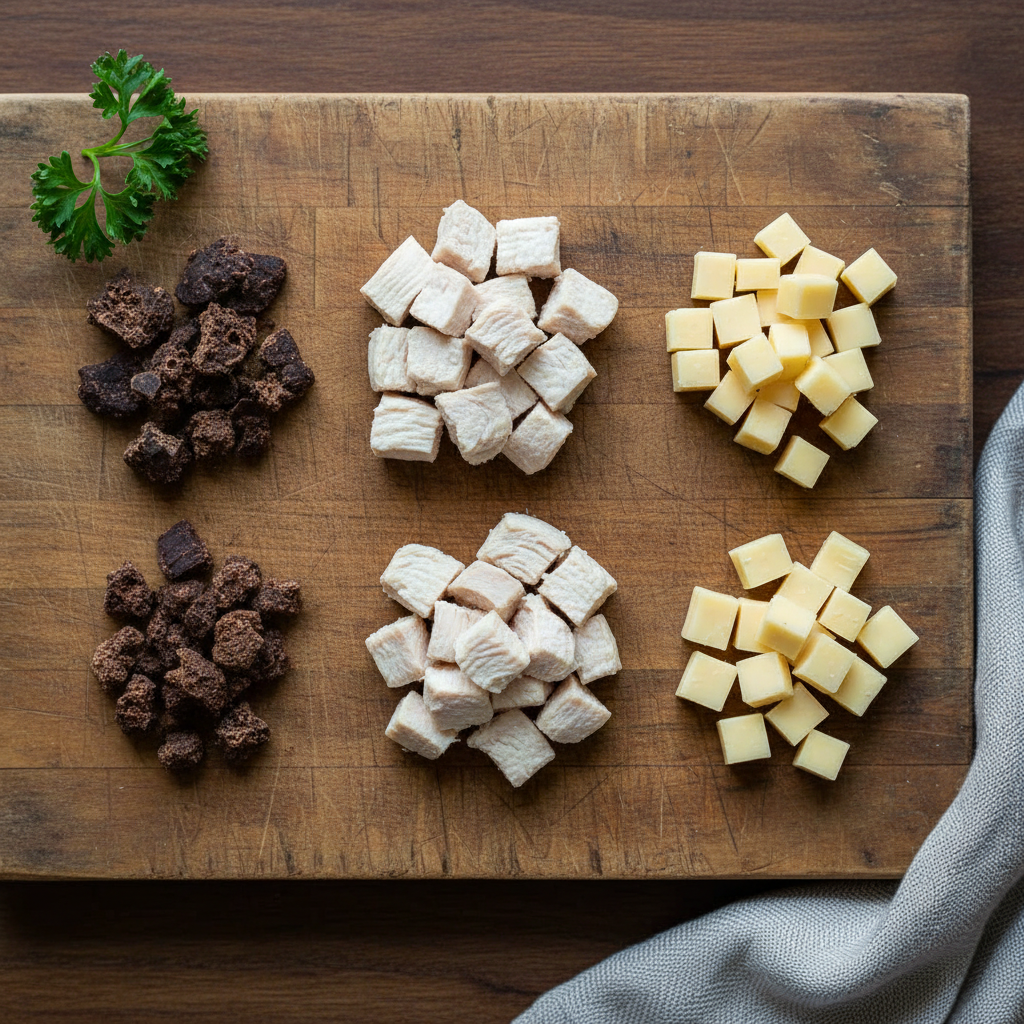
Boiled chicken and turkey are excellent options. As a lean meat, they are easy to digest, highly appealing, and suitable for puppies with sensitive tummies. Always cook meat plain, then dice it into small pieces.
Freeze-dried liver is another popular choice among trainers. It has a strong smell, delivers a high-value treat reward, and can be broken into tiny pieces for fast reinforcement without overfeeding.
Low-fat cheese can be used as an emergency reward, such as recall training, but because it is calorie-dense, it should only be given in a small amount and used in moderation.
When using real food, ensure everything is cooked, unseasoned, and factored into your puppy’s daily diet.
Discontinue any treats that cause stomach upsets or signs of an upset tummy.
Commercial Puppy Training Treats
Commercial puppy treats designed specifically for training are convenient and consistent.
Look for soft, bite-sized dog treats that your puppy can swallow quickly. This helps maintain flow and focus during a training session. Single-protein puppy training treats can also help reduce the risk of allergies or digestive issues, particularly for dogs with sensitive stomachs.
Always check ingredient labels. The best dog training treats use natural ingredients with minimal processing. Avoid artificial colours, flavours, and fillers, which add little nutritional value and may affect feeding balance or behaviour.
Healthy Fruit and Vegetable Options
Some healthy treats can come from fruit and vegetables, particularly for puppies that tolerate them well.
Options like blueberries, steamed carrots, and sweet potato (plain and cooked) can be useful low-calorie rewards. These work best when used occasionally and introduced slowly.
Not all dogs digest produce well. If your pup loses focus or shows digestive discomfort, switch back to protein-based treats that better suit their preferences.
Using a mix of real food, commercial treats, and produce allows you to adjust reward value across different training classes and environments.
Treats to Avoid When Training Your Puppy
While treats are a powerful training tool, not all treats are safe or appropriate for puppies. Choosing the wrong options can lead to dental damage, digestive issues, or serious health risks, especially during early development.
Avoid hard treats that require heavy chewing, as these can damage teeth or gums during the early stage of development. Soft treats are safer and easier to eat.
Rawhide and highly processed snacks should be avoided due to digestion issues and choking hazard risks. Similarly, high-fat, high-salt, or sugary snacks can negatively affect nutrition and long-term health.
Some human foods are toxic to dogs and must never be used as a delicious reward, including chocolate, onion, garlic, grapes, raisins, and anything containing xylitol.
Always choose treats that can be broken into small, manageable portions to keep training safe and effective.
When to Use Kibble vs High-Value Treats vs Mixed Approaches
Different training situations call for different rewards. Knowing when to use kibble and when to use higher-value treats helps maintain motivation without overfeeding.
Kibble works well for repetitive cues like a sit, especially during low-distraction training at home. Because it’s part of your puppy’s regular food, it allows frequent reinforcement without excess calories.
High-value treats are better suited to recall training, new skills, or busy environments. These rewards help maintain focus and encourage engagement when distractions are present.
A mixed approach is often ideal. Rotate kibble with higher-value options to maintain motivation while keeping feeding balanced.
This strategy helps puppies prefer working for rewards without becoming reliant on a single yummy treat.
How Many Treats Should You Use? (The 10% Rule)
Treats are a powerful training tool, but they should always be used in moderation. A good rule of thumb is that treats should make up no more than 10% of your puppy’s daily calorie intake. This helps ensure your puppy receives balanced nutrition while still benefiting from regular rewards during training.
On days with longer or more intensive training sessions, it’s important to adjust meal portions accordingly. If your puppy earns more treats than usual, slightly reducing the size of their regular meals can help keep calorie intake consistent and prevent overfeeding.
One of the easiest ways to manage this balance is by using part of your puppy’s daily kibble as rewards. Kibble works particularly well for easier behaviours or practice sessions at home, allowing you to reinforce learning without adding extra calories.
Following the 10% rule is especially important during periods of frequent training, such as puppy classes or early learning stages.
By monitoring treat intake and making small adjustments to meals, you can prevent unwanted weight gain while still keeping training motivating, effective, and positive.
Learn What Treats are Best When Training Your New Puppy at Allbreeds! Contact Us Today!
Choosing the right treats plays a big role in successful puppy training, but knowing how and when to use them is just as important. By selecting small, soft, high-value rewards and using them thoughtfully, you can encourage good behaviour while supporting your puppy’s health and confidence. If you’d like personalised guidance on treats, training techniques, or puppy training classes, our team here at Allbreeds is here to help!
Contact us today to give your puppy the best possible start and build strong foundations that last a lifetime.