

Reactive Dog Training Tips
Living with a reactive dog can feel overwhelming for many dog owners. One moment you’re heading out for a walk, the next your dog starts barking and lunging when other dogs, a person, or a moving object appears.
Dog reactivity is when a dog has a big emotional response to something in their environment.
It might look like:
- Barking
- Lunging
- Freezing when they see another dog, a person, or movement nearby.
The good news is that you’re not alone. Many dog owners face this challenge, and in time, their dogs’ reactive behaviour will improve. With the right setup, realistic expectations, and dog training tips.
Many dogs learn to feel safer, calmer, and more in control around their triggers. Progress doesn’t come from forcing exposure or “pushing through” reactions, a bad idea that often makes things worse.
Core Training Techniques
What to do with a reactive dog in everyday situations, during training sessions, on walks, and whenever triggers appear in their environment.
The aim isn’t to suppress behaviour, but to support behaviour modification by changing how your dog feels and giving them a clear, repeatable training plan to follow.
Step-by-Step
- Start below threshold: Work at a safe distance where your dog notices the trigger but stays calm enough to eat. Respecting the dog’s threshold protects their ability to learn.
- Mark the moment they notice: As soon as the trigger appears, use a marker word like “yes” or a click. This helps your dog understand which behaviour is being reinforced.
- Immediately reward: Deliver a high-value treat. Timing is critical for effective counter conditioning.
- Repeat until automatic: Over time, the dog reacts less, maintains focus, and looks to you instead of escalating.
- Reduce distance slowly: Only decrease distance once your dog stays calm and engaged across multiple training sessions.
Rules to Follow
- If your dog reacts, you’re too close, increase distance
- Progress isn’t linear; setbacks are normal
- Short training sessions work best (5–10 minutes)
Focus and Engagement Games
“Look at That” (LAT)
LAT improves the dog’s attention without suppressing curiosity, supporting loose leash behaviour and emotional regulation.
- Your dog sees a trigger
- You mark
- Your dog turns its attention back to you
- Reward follows
“Find It” Scatter
- Toss treats on the ground
- Encourage sniffing and slow searching
Sniffing lowers arousal, supports calm behaviour, and helps reset the dog’s nervous system when strange dogs or sudden movement appear.
Treat Magnet + U-Turn (Emergency Only)
- Bring food close to the nose
- Calmly turn and walk away
This is a management tool, useful when your dog starts reactive barking, but not a replacement for structured reactivity training.
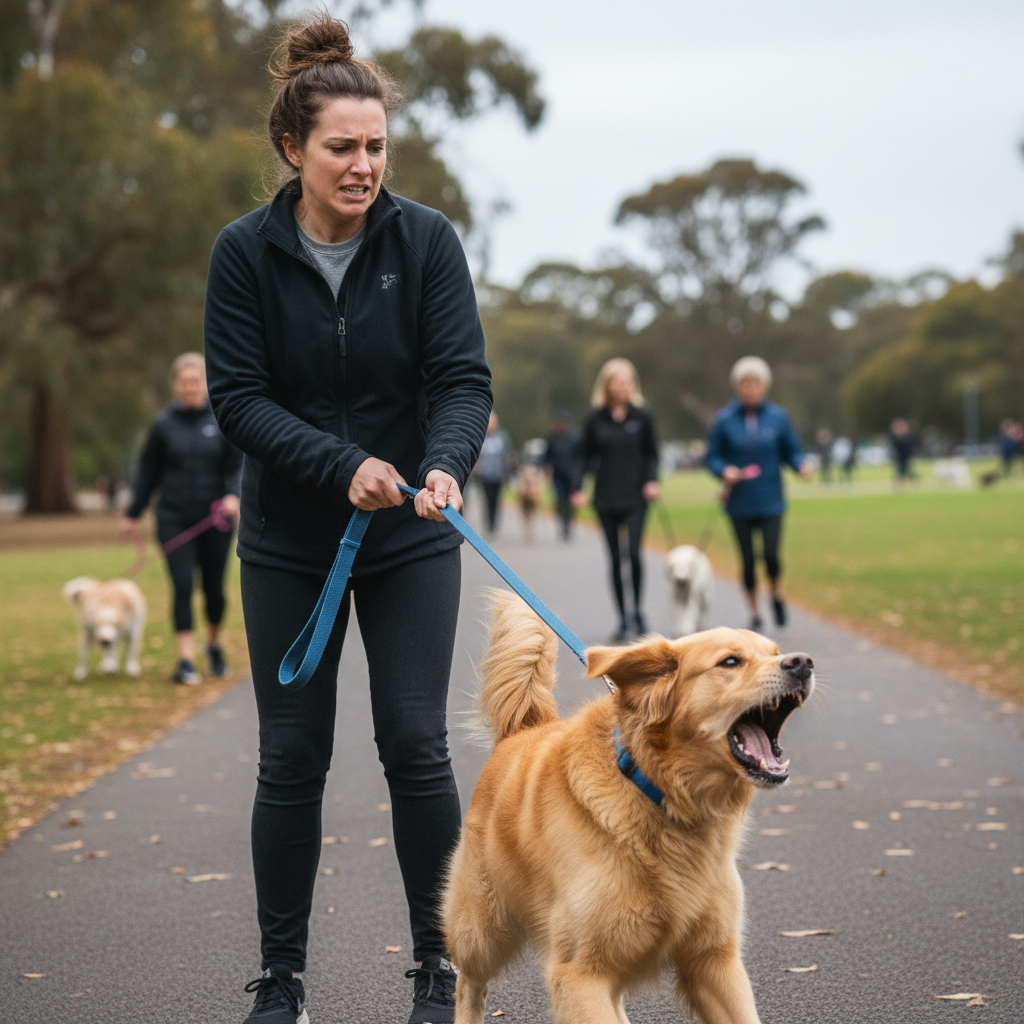
What to Do in the Moment When Your Dog Reacts
Even with good training, reactions will still happen.
When your dog reacts or starts barking and lunging:
- Don’t cue obedience learning isn’t possible over threshold
- Calmly create distance using the leash
- Reset once safe with sniffing or food scatter
- End the session if your dog reacts repeatedly
This protects your dog’s ability to learn in the next session and prevents reactive and aggressive dog behaviour from recurring.
If your dog’s reactions feel difficult to manage or are escalating, working with a qualified dog trainer who has experience with reactivity can make a significant difference.
Progress Expectations
Many reactive dog owners quit too early because expectations don’t match reality. For some dogs, improved emotional regulation can eventually open the door to activities like structured walks, group classes, or even dog sports, but only if and when the dog feels ready.
Progress Is Not Linear
Good weeks followed by harder weeks are normal. Stress, sleep, environment, and trigger intensity all influence behaviour.
Learning is affected by the dog’s environment and emotional state.
Aim for Functional Real Life Wins
Focus on improvements that genuinely change daily life:
- Calmly pass by other dogs at a distance
- Faster recovery when the dog reacts
- Fewer reactions per week
These outcomes matter more than a perfectly well-behaved dog.
A Simple Way to Track Progress
After walks, note:
- The trigger
- Approximate distance
- Whether your dog took treats
- How quickly they recovered
Over time, this shows improvement, even when it feels subtle day to day.
Need More Reactive Dog Training Tips? Contact Allbreeds Today!
Reactive behaviour can feel challenging, but with the right approach, real progress is possible. By working at your dog’s pace, focusing on emotional change rather than suppression, and following a clear, repeatable plan, many dogs learn to feel safer and more in control around their triggers.
If you need personalised guidance or support tailored to your dog’s specific needs, the experienced trainers at Allbreeds can help you build confidence, clarity, and lasting improvement for both you and your dog.