

How to Teach Your Dog to Be Home Alone
Teaching your dog to be home alone takes a slow, step-by-step process of building independence. Tire your dog out with physical and mental exercise first, then condition them to a safe zone, such as a crate or playpen, using a high-value, long-lasting treat.
Practise brief “fake departures” that gradually increase in time, and always keep your hellos and goodbyes low-key. Dogs are social creatures who love to spend time with their family, so being calm on their own is a skill we teach them, not something they are born knowing.
At Allbreeds, our professional dog training has helped thousands of Perth owners get there, and the process is one you can start at home today.
Why Alone Time Matters (and What Can Go Wrong)
Because dogs are social creatures, separation anxiety can develop if they haven’t learned to enjoy alone time. Teaching your dog to be alone is far easier when you start before any problems set in.
When a dog can’t cope, that stress tends to show up as problem behaviours.
Common signs include:
- Barking and howling near the front door
- Scratching furniture or the door
- Toileting inside
- General restlessness and an inability to settle
There are limits to keep in mind too. An adult dog should not be left alone for more than four hours; a new puppy can typically only manage around two, and any dog left for eight hours may struggle with waste control. Spotting the early signs of trouble makes them far easier to fix.
One golden rule: never punish behaviours linked to separation anxiety. Punishment only worsens the distress and makes the whole process harder.
Step 1: Tire Them Out First
A tired dog is a calm dog. Before any alone-time practice, or before you leave home, take your dog for a solid walk or play an active game of fetch. This burns off pent-up energy and naturally encourages them to rest and sleep while you are away.
If your schedule is tight, a dog walker can help keep that exercise consistent.
Mental exercise counts too, so chew toys and other constructive activity tire the brain as well as the body, which helps many dogs settle far more quickly.
Step 2: Desensitise Your Departure Cues
Dogs are quick learners. They soon link picking up your car keys, putting on shoes or grabbing your bag with your departure, which triggers anxiety before you even reach the door.
The fix is to break that link through positive reinforcement of calm behaviour. Perform these cues randomly throughout the day when you are not actually leaving.
- Pick up your car keys, then sit back down on the couch
- Put on your jacket and make a cup of tea
- Open and close the front door, then stay home
Repeat this often. Over time, the cues stop predicting that you will leave the house, so your dog stays relaxed.
Step 3: Create a Safe Zone
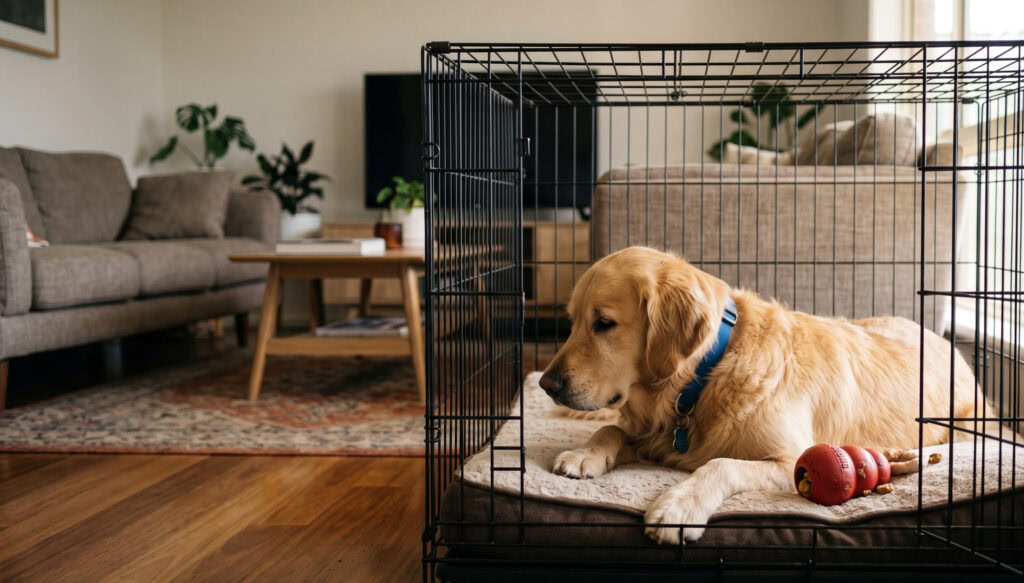
Next, designate a specific, safe and comfortable confinement area for your dog. This might be a cosy corner, a training crate or a puppy-proofed room. Crates work well because they help dogs feel secure when left alone.
A few crate training basics:
- The crate should be large enough for your dog to stand up and turn around
- Proper crate training prevents dogs from fouling their bed area
- Introduced well, a crate can actually reduce separation anxiety
Always start crate training with positive reinforcement. Toss in treats, add the dog’s bed and a couple of chew toys, and let your dog explore in their own time.
The aim is a good association, so the space feels like their own calm retreat rather than a punishment.
Step 4: Give Them Something Good to Do
A safe space is far more powerful when it comes with something brilliant to do. Give your dog a high-value, long-lasting distraction that requires focus and licking, which naturally lowers their heart rate.
Great options include:
- A puzzle toy filled with food
- A stuffed Kong or a frozen treat-filled Kong
- A long-lasting chew
It is a good idea to keep certain toys just for alone time. When the good stuff only appears as you leave, your dog builds a positive association with being on their own.
It also helps to leave a radio, TV or white noise machine playing on low volume. Background noise masks sounds from neighbours or traffic that might otherwise unsettle an anxious dog.
Step 5: Start Small and Build Up Slowly
Rushing this step is the fastest way to create setbacks, so treat it as a gradual process.
Begin small; quietly walk out of the room or step outside for just 10 to 30 seconds, and return immediately, before your dog has a chance to whine or panic.
From there, you slowly increase the duration over days and weeks.
A simple progression looks like this:
- 30 seconds out of sight
- 1 minute
- 5 minutes
- 15 minutes, then longer
Repeat each stage until your dog stays calm and relaxed, then gradually increase the time again.
If they seem anxious at any point, drop back to a shorter, easier step, because steady progress beats big leaps every time.
Step 6: Keep Hellos and Goodbyes Low-Key
The secret to successful alone-time training is neutrality, so don’t make leaving the house or coming home a big deal. When you go, use a calm tone for goodbyes and skip the big fuss.
When you return, wait until your dog is completely calm before you acknowledge them, then offer quiet, gentle praise. If you turn arriving home into an exciting event, you heighten their anticipation and anxiety while you are gone.
Calm departures and calm returns tell your dog that being alone is simply part of a normal, secure day.
When to Get Professional Help
Some dogs show severe signs of distress no matter how carefully you follow the process. If your dog is panicking, injuring themselves or unable to settle even for short periods, it is worth seeking professional guidance. An experienced trainer can assess what is happening, offer tailored advice, and build a plan suited to your dog.
With patience and the above steps, most dogs learn to feel calm, secure and genuinely content on their own, so you can leave home without the worry.
A calm routine benefits both you and your dog, so start small, stay consistent, and give your dog the time to build the confidence to relax while you are away.
Ready for Professional Help? Contact Allbreeds Today!
If separation anxiety is making home-alone time stressful for you and your dog, you don’t have to work through it on your own.
Our experienced Perth trainers have helped thousands of dogs learn to relax, feel secure and enjoy their own company.
Get in touch with Allbreeds today, and we will build a calm, practical plan tailored to your dog.