

How Much Exercise Does Your Dog Actually Need?
Knowing how much exercise your dog actually needs is one of the most useful things you can learn as an owner. An average adult dog needs 30 to 120 minutes of daily exercise, depending heavily on their age, breed and health.
High-energy working and herding breeds require more than one to two hours of rigorous activity, whereas toy or brachycephalic (short-nosed) breeds may only need casual, low-impact strolls.
In other words, there is no single magic number. The right amount of dog exercise comes down to your individual dog, and getting it right keeps them at a healthy weight and in good health.
What Determines How Much Exercise Your Dog Needs
Three big factors shape your dog’s exercise needs: breed, age and health. Temperament matters too, because some dogs are naturally energetic while others are happy to lounge around.
A young Kelpie and a senior Pug simply do not have the same requirements, so a good exercise routine is always tailored to the dog in front of you.
Exercise for dogs is never one-size-fits-all. Many dogs end up with too little or too much activity simply because their routine was guessed rather than matched to their actual needs.
Breed is often the biggest clue. Understanding your dog’s breed and its original purpose tells you a lot about whether you have a marathon runner or a gentle stroller on your hands.
Exercise by Life Stage
Your dog’s exercise routine should shift as they grow, because what a puppy needs is very different from what an adult or senior dog can handle.
Puppies
Puppies do best with short bursts rather than one long walk. Aim for roughly 10 to 15 minutes of activity, two to three times a day, and let several short play sessions do the heavy lifting.
Avoid prolonged, strenuous exercise while their bones and joints are still growing, and always start slow. Good early habits pair naturally with structured puppy training, which channels all that energy in the right direction.
Adult Dogs
Most adult dogs, roughly between six months and seven years, need one to two hours of daily activity, with a minimum of about 30 minutes.
Mix aerobic exercise like dog running and trotting with mental exercise such as scent games and puzzle toys.
This blend of physical exercise and brain work leaves your dog satisfied rather than wired.
Senior Dogs
Senior dogs still need to move, but gentler is better. Around an hour of low-impact exercise a day works well, broken into shorter 15 to 20 minute sessions.
Keep an eye out for joint problems, and slow the pace on days when they seem stiff.
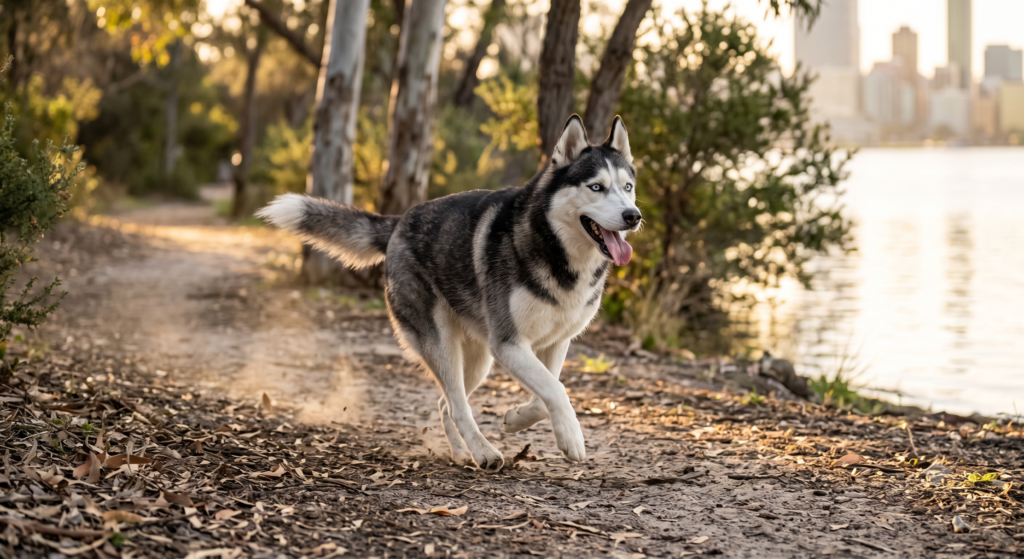
Exercise by Breed and Energy Level
Energy level varies enormously between dog breeds, so it helps to know roughly where yours sits.
High energy breeds, working breeds and many active or larger breeds thrive on up to two hours a day, often including 60 to 90 minutes of rigorous activity.
Border Collies, Kelpies, Huskies and similar dogs genuinely need this outlet, and they often need as much exercise as you can realistically fit into a day. Without it, that excess energy tends to spill into unwanted behaviours.
At the other end, flat-faced and low-energy breeds need less exercise, usually around 30 to 60 minutes of low-impact exercise. Pushing a short-nosed dog too hard can cause breathing trouble, so casual, regular walks suit them best.
Weight and health change the picture too. Overweight dogs benefit from gentle, low-impact routines that protect the joints, and any dog with a medical condition such as arthritis or heart disease needs a plan checked with your vet.
Why Physical Exercise Matters
Regular exercise does far more than tire your dog out. It helps maintain a healthy weight, keeps your dog’s weight in check and prevents the weight gain that creeps in with a sedentary life.
Daily exercise also strengthens bones, joints and muscles, supports the immune system and boosts cardiovascular fitness. All of this adds up to better overall health and a dog that is more likely to stay healthy for the long haul.
Consistent physical activity is the foundation of your dog’s physical health, and when it is paired with enrichment, it protects their mental well-being just as much.
Burning off excess energy has behavioural benefits as well. A well-exercised dog is usually calmer and happier, while a lack of activity often shows up as restlessness, weight gain and destructive habits around the house.
Don’t Forget Mental Stimulation
Here is the part many dog owners miss: mental stimulation is just as important as physical exhaustion. A tired body with a bored brain still leads to trouble, so mental exercise is key to your dog’s mental wellbeing.
Mixing up the routine keeps things fresh and supports both physical and mental health.
Try activities like:
- A “sniffari” walk where your dog is free to explore and follow their nose
- Puzzle toys and food-based scent games
- Hide and seek around the house or garden
- Agility training or a simple backyard obstacle course
- An intense game of fetch or tug
These games reduce boredom and are brilliant for wet Perth days when a long walk is off the table. Group activities help too, and our K9 Bootcamp builds this kind of structured, mind-engaging work into everyday training.
Building a Safe & Sustainable Exercise Routine
The best exercise routine is one you can actually keep up. Start slow, build gradually, and use a harness rather than a collar for long walks to protect your dog’s neck.
Warm-up and cool-down periods matter, especially for older dogs and active breeds heading into an intense session.
Variety keeps it sustainable. Daily dog walks are the backbone of any routine, so blend regular walks of different lengths, from short walks on busy mornings to a proper good walk or the occasional long walk on weekends, with play sessions and everyday activity.
If your schedule is tight, there are plenty of ways to make sure your dog gets enough exercise:
- Book a dog walker for the middle of the day
- Visit dog parks so your dog can burn energy with other dogs
- Arrange playdates with other pups, which is easy if you have two dogs at home already
Just be sensible in the heat, avoid leaving your dog inactive for long periods, and watch for any health issues as you increase the load.
Dogs love routine, and a steady, varied plan is what keeps them thriving.
Ready to Get Your Dog Moving? Contact Allbreeds Today!
Working out how much exercise your dog needs takes a little trial and error, but the payoff is a healthier, calmer and happier companion.
Match the activity to your dog’s age, breed and health, keep their mind as busy as their body, and you will have a four-legged friend in great shape for life.
If you would like more advice, get in touch with Allbreeds today, and our Perth team will help you build the perfect routine for your dog.