

7 Training Tips for an Aggressive Dog
Training an aggressive dog requires a calm, consistent, reward-based approach focused on behaviour modification rather than punishment.
The first step is identifying specific triggers: other dogs, strangers, loud noises, the delivery person, or even a family member approaching the dog’s personal space. Once triggers are known, positive reinforcement changes the dog’s emotional association from fear to positive anticipation.
Working with a professional dog trainer is strongly recommended for safety and long-term results.
Dog aggression rarely resolves on its own. Consistent, professional intervention is almost always needed.
Training Tips for an Aggressive Dog
Once you understand what is driving the aggression, these tips will help you address it systematically and safely.
Tip 1: Prioritise Safety First
Safety is the non-negotiable first step for the dog, the owner, and everyone nearby.
Use a leash or lead at all times in public. At home, a baby gate is one of the most practical tools for managing dogs or giving aggressive dogs a safe exit from a stressful situation.
In public situations where biting is a risk, a muzzle is not a punishment. It is a responsible management tool that keeps everyone safe while training progresses.
Never put your own dog in a situation where it is likely to react aggressively. Crowded dog parks and off-lead environments with unknown dogs are high-risk settings for a dog with aggression issues.
Tip 2: Never Use Punishment to Address Aggression
Punishment, including yelling, physical correction, or shock collars used reactively, does not reduce aggression. It escalates it.
When a dog acts aggressively and is then punished, it does not learn that the behaviour is wrong.
It learns that the trigger (the other dog, the stranger, the delivery person) now predicts both a threat and pain. This validates the fear response and often makes a dog’s aggression significantly worse over time.
The flip side is equally important. Rewarding good behaviour around specific triggers consistently teaches the dog that calm responses lead to positive outcomes. That is the foundation of effective aggressive dog training.
Corrections in balanced training are entirely different from punishment. They are well-timed, clear, and always follow teaching, never replace it.
Tip 3: Identify Your Dog’s Specific Triggers
Knowing exactly what causes a dog’s aggression is essential before any training can be effective.
Note exactly when the aggression occurs. Is it on the leash? At home? With strangers? With a specific family member? Does the dog growl when another animal approaches its food bowl, or only when two dogs share a small space?
Common triggers include other dogs, delivery people, loud noises, strangers approaching personal space, and resource competition between two dogs in the same household.
Keeping a short trigger log after each incident helps identify patterns quickly.
A dog’s sense of smell and hearing means it perceives threats well before its owner does. Understanding this helps dog owners anticipate and avoid situations before they escalate.
The more precisely you know the root cause, the more targeted and effective the training will be.
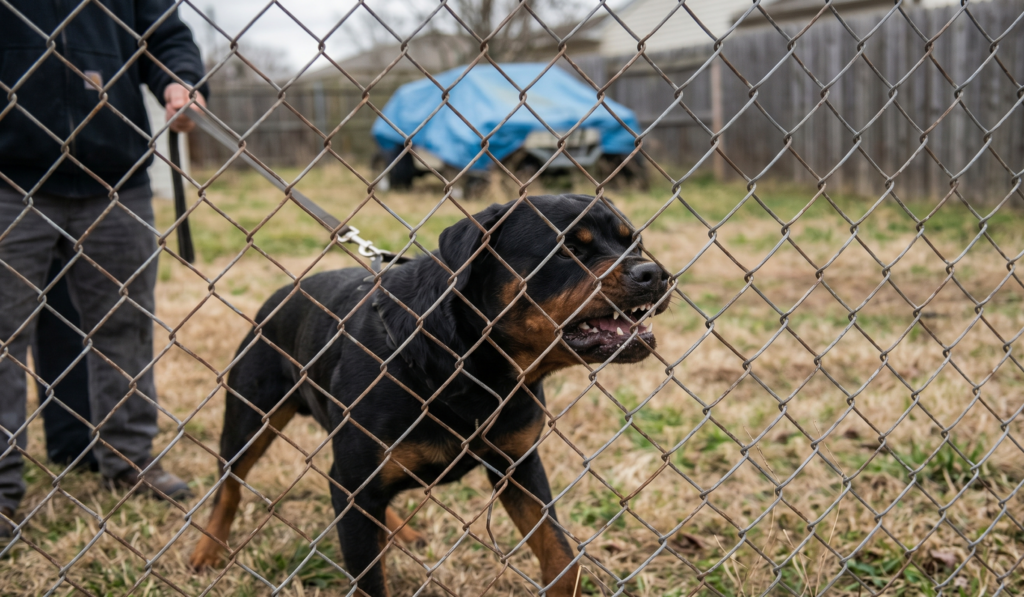
Tip 4: Use Balanced Training to Build New Behaviour
Balanced dog training uses rewards and clear corrections together to give aggressive dogs a complete picture of what is expected.
When the dog’s focus remains on you rather than the trigger, reward them immediately with treats or praise. Reward eye contact, as this signals engagement and trust.
Once the dog clearly understands what is being asked and chooses not to comply, a well-timed correction communicates that the choice was wrong.
This is not punishment. The dog has been taught the behaviour first.
A dog that is only ever rewarded has no clear feedback when it makes the wrong choice. For dogs dealing with fear, aggression or predatory aggression, that confusion makes things worse. Balanced training removes it.
Keep sessions short and consistent. Five to ten minutes daily beats long, infrequent ones.
Tip 5: Apply Desensitisation and Counter Conditioning
Counter-conditioning and desensitisation are two of the most evidence-backed approaches for addressing fear-based aggression and reactive behaviour in dogs.
Desensitisation means gradually exposing the dog to its trigger at a safe distance, far enough that the dog notices it but does not react aggressively.
Counter conditioning pairs the trigger’s presence with something the dog values: treats, calm praise, or play. Start well below the dog’s reaction threshold and only reduce the distance once the dog is consistently calm across multiple sessions.
If the dog reacts, the distance is too small. Increase it and start again.
This is a slow process. It can take weeks or months, depending on the dog’s history, personality, and the severity of the aggression. Rushing it is one of the most common mistakes dog owners make.
Tip 6: Stay Calm and Respond Calmly
Dogs read their owner’s emotional state constantly. An anxious, tense handler communicates to the dog that there is something to fear.
When dog owners tighten the leash, hold their breath, or freeze at the sight of a trigger, the dog often escalates. It senses that fear response coming directly from the handler.
Respond calmly, move confidently, and avoid staring directly at the trigger. Your energy is one of the most powerful training tools you have access to, and it costs nothing to use.
Tip 7: Increase Mental Stimulation and Exercise
A dog that is under-stimulated and under-exercised carries a higher baseline level of arousal. This makes aggressive reactions more likely and harder to manage.
More exercise through structured walks on the leash (not just backyard time) helps reduce overall arousal and gives the dog a consistent, positive outlet. A physically tired dog is a calmer dog.
Mental stimulation through puzzles, training games, and scent work lowers anxiety and improves the dog’s capacity to focus during sessions. This is especially important for high-drive breeds where boredom and frustration are common triggers for reactive and aggressive behaviour.
Puzzles and short training games between sessions also reinforce the owner-dog relationship, which is the foundation on which everything else is built.
What Not to Do When Training an Aggressive Dog
Knowing what to avoid is just as important as the tips above.
Do not force your dog into situations where it is likely to react aggressively. Exposure without readiness does not build confidence. It creates more anxiety and makes the dog’s aggression worse.
Do not yell, physically strike, or use intimidation. This validates the fear response and teaches the dog that humans are unpredictable threats.
Do not assume the aggression will go away on its own. It almost never does without consistent, structured intervention.
Do not inadvertently reinforce aggression by retreating, giving attention, or removing the trigger every time the dog acts aggressively. This teaches the dog that aggression works.
Still Need Further Help? Contact Allbreeds For Help Today!
When it comes to dog training, clarity, consistency, and timing make all the difference. Whether you’re dealing with basic obedience or more complex behavioural challenges, a balanced approach ensures your dog understands what’s expected while building trust and reliability.
With the right guidance, even difficult behaviours can be addressed safely and effectively.
If you’re unsure where to start or need professional support, the team at Allbreeds can help you implement a structured training plan that delivers real, lasting results.